Types of Commercial Property Loans Explained
Securing the right financing structure is one of the most critical decisions in commercial property investment and business expansion. Selecting an appropriate debt vehicle directly impacts your cash flow, risk exposure, and overall return on investment.
Because commercial properties vary wildly—from owner-occupied retail space to multi-tenant industrial parks and value-add redevelopment projects—lenders offer diverse commercial debt instruments. In this guide, we break down the primary commercial real estate loan types, compare capital sources, and help you evaluate which funding option best matches your capital needs in 2026.

Understanding the nuances of various commercial real estate loan types and their interest rates is crucial for informed investment decisions.
What Are the Different Commercial Real Estate Loan Types?
Understanding the spectrum of commercial loan products allows investors and business owners to select structures tailored to their holding timeline, risk tolerance, and cash flow requirements.
Below is a detailed comparison matrix outlining the major commercial real estate loan products:
| Loan Type | Typical Interest Rates | Term Length | Maximum LTV Ratio | Ideal Borrower Profile |
|---|---|---|---|---|
| Traditional Commercial Mortgage | Competitive Fixed / Variable | 5–20 Years (20–25 yr Amort.) | 65% – 75% | Established businesses and investors acquiring stabilized assets. |
| SBA 7(a) Loan | Prime + Spread (Fixed/Variable) | Up to 25 Years (Real Estate) | 85% – 90% | Small business owners needing funds for property plus equipment/working capital. |
| SBA 504 Loan | Below-Market Fixed Rates | 10, 20, or 25 Years | Up to 90% | Owner-occupants purchasing major fixed assets or real estate. |
| Bridge Loan | Higher Interest (Short-term) | 6 Months – 3 Years | 65% – 80% | Investors needing immediate capital, value-add renovation, or repositioning. |
| Hard Money Loan | Higher Interest + Points | 1 – 3 Years | 50% – 70% | Real estate fix-and-flip buyers or borrowers needing fast asset-based funding. |
| CMBS / Conduit Loan | Competitive Fixed Rate | 5 – 10 Years (Non-Recourse) | 70% – 75% | Investors purchasing income-generating, fully stabilized assets ($2M+). |
| Commercial Construction Loan | Variable Interest Rate | 1 – 3 Years (Converts to Perm) | 65% – 75% LTC | Developers and business owners constructing new commercial buildings. |
Top Commercial Real Estate Funding Sources
When seeking capital, identifying the right institutional or private funding source is just as important as selecting the loan type. Lenders vary significantly regarding risk appetite, speed of execution, and underwriting stringency.
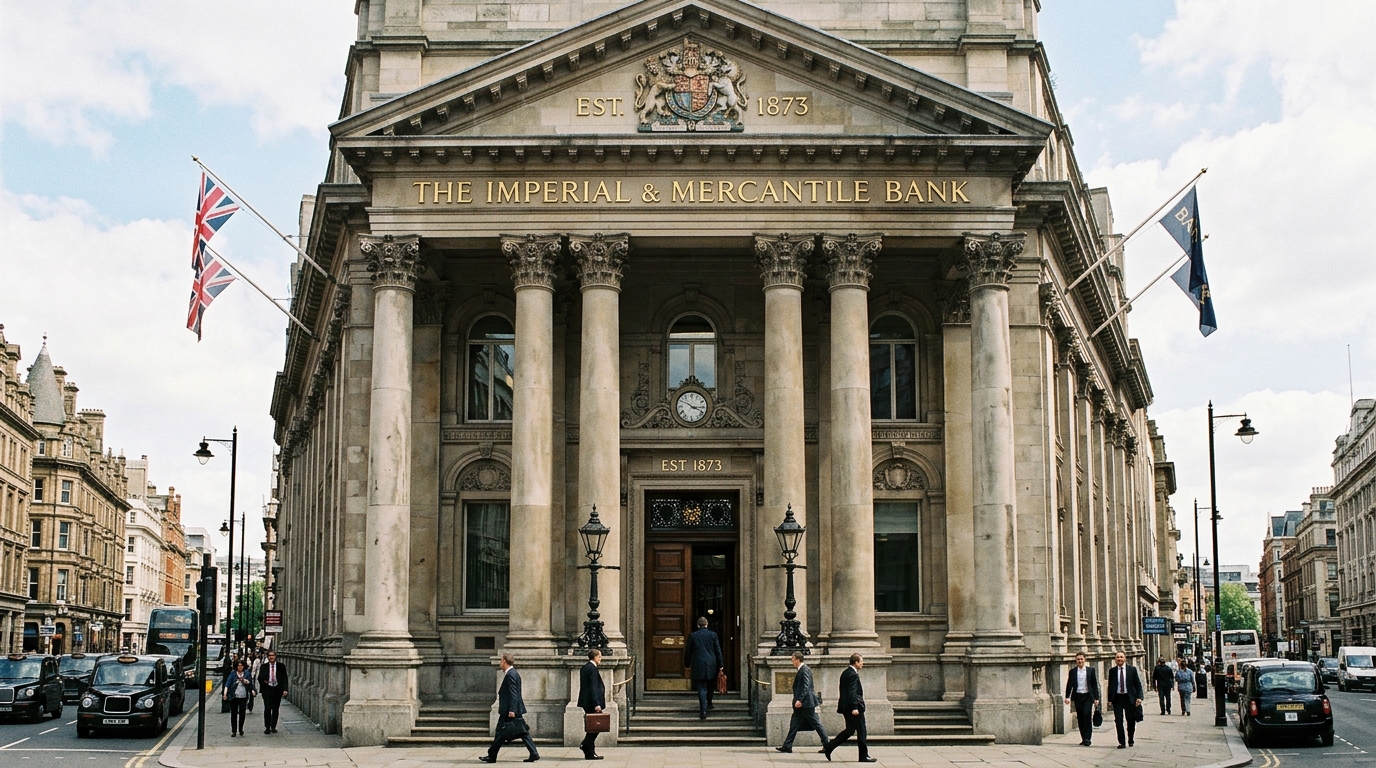
Traditional banks remain a cornerstone for commercial real estate financing, offering competitive rates and established relationships.
Traditional Bank Loans
Traditional lenders—including national commercial banks, regional financial institutions, and community banks—remain the cornerstone of foundational commercial real estate financing.
- Key Advantages: Offers competitive interest rates, lower origination fees, and localized market relationship opportunities.
- Underwriting Requirements: Conservative standards requiring high credit scores (700+), strong global cash flow, clear financial statements, and minimum DSCRs of 1.25x or higher.
- Best Used For: Stabilized income-producing assets or owner-occupied spaces where speed to close is secondary to securing low borrowing costs.
SBA 7(a) and 504 Loans
Government-backed loans through the U.S. Small Business Administration (SBA) exist to foster small business ownership by reducing lender risk through federal guarantees.
- SBA 7(a) Program: Designed for general business purposes, including real estate purchase, leasehold improvements, debt refinancing, and operational working capital up to $5 million.
- SBA 504 Program: Specifically structured for owner-occupied real estate and long-term machinery. The structure splits financing into three parts: 50% from a third-party commercial bank, 40% from a Certified Development Company (CDC) backed by the SBA, and 10% cash down payment from the borrower.
- Best Used For: Small business owners operating in at least 51% (existing) or 60% (new construction) of the building’s total square footage.
Bridge Loans and Hard Money Lenders
When conventional banks decline applications due to property condition, un-stabilized vacancy rates, or tight closing timelines, private and alternative lenders fill the gap.
- Bridge Financing: Provides flexible short-term capital designed to “bridge” the gap between property acquisition/renovation and long-term permanent financing or asset sale.
- Hard Money Loans: Asset-backed short-term loans provided by private companies or individuals. Approval centers on property equity rather than borrower tax returns.
- Best Used For: Fast-moving opportunistic acquisitions, distressed property buyouts, or value-add real estate plays requiring rapid closing in days rather than months.
Evaluating Commercial Real Estate Funding Options
Choosing among competing commercial property financing options requires evaluating several core factors beyond interest rates alone:
- Total Cost of Capital: Look beyond the headline interest rate to calculate origination points, lender legal fees, exit fees, prepayment penalties, and appraisal costs.
- Speed and Execution Certainty: Private bridge lenders can fund deals within 10 to 14 days, whereas traditional banks and SBA programs may require 45 to 90 days. If a purchase contract has tight closing deadlines, speed may outweigh lower interest rates.
- Recourse vs. Non-Recourse Debt: Recourse loans allow the lender to seek deficiency judgments against personal assets if default occurs. Non-recourse loans (common in CMBS and institutional agency financing) limit lender recovery solely to the underlying property asset.
- Loan Covenants and DSCR Requirements: Examine financial covenants carefully. Some traditional bank loans enforce annual DSCR testing, requiring borrowers to deposit additional liquidity if cash flows dip.
If you are unsure how to evaluate these variables during an active property acquisition, review our step-by-step guide on how to get a commercial property loan.
What Are the Top Commercial Property Financing Options?
Below are answers to frequently asked questions regarding commercial property loans and funding alternatives.
What is the most popular commercial real estate loan type for small businesses?
For small business owners purchasing operational real estate, SBA 504 and SBA 7(a) loans are the most popular options. They offer down payments as low as 10% and long repayment terms up to 25 years, preserving operational working capital.
How do bridge loans differ from traditional commercial mortgages?
Bridge loans are short-term (6 months to 3 years), higher-interest debt instruments designed to finance property acquisition, repositioning, or stabilization. Traditional commercial mortgages are long-term (5 to 20+ years), lower-interest debt instruments intended for fully stabilized, income-generating real estate.
What does non-recourse commercial financing mean?
Non-recourse commercial financing means the lender’s recourse in event of borrower default is limited to foreclosing on the mortgaged property itself. Lenders cannot go after the borrower’s personal bank accounts, personal real estate, or other external assets, except in cases of fraud or deliberate bad acts (carve-out exceptions).
Where can active real estate investors find customized funding solutions?
Active real estate investors can leverage structured debt advisors, private debt funds, commercial banks, and dedicated platforms offering tailored financial products. Discover our complete range of specialized commercial property financing solutions tailored for growth-minded investors.
Disclaimer: Content provided in this article is for informational purposes only. Terms, interest rates, and loan structures vary based on creditworthiness, property performance, market conditions, and lender guidelines.