Commercial Property Down Payment Requirements by Asset Class
In commercial real estate underwriting, lenders do not apply a single blanket down payment rule to every transaction. Instead, equity requirements vary widely depending on the underlying property asset class. A stable apartment complex carries a substantially different risk profile than an empty office tower or a single-tenant retail building.
Understanding commercial property down payment by asset class allows investors, developers, and business owners to accurately estimate upfront equity needs, structure viable capital stacks, and select loan programs aligned with property-specific underwriting criteria.
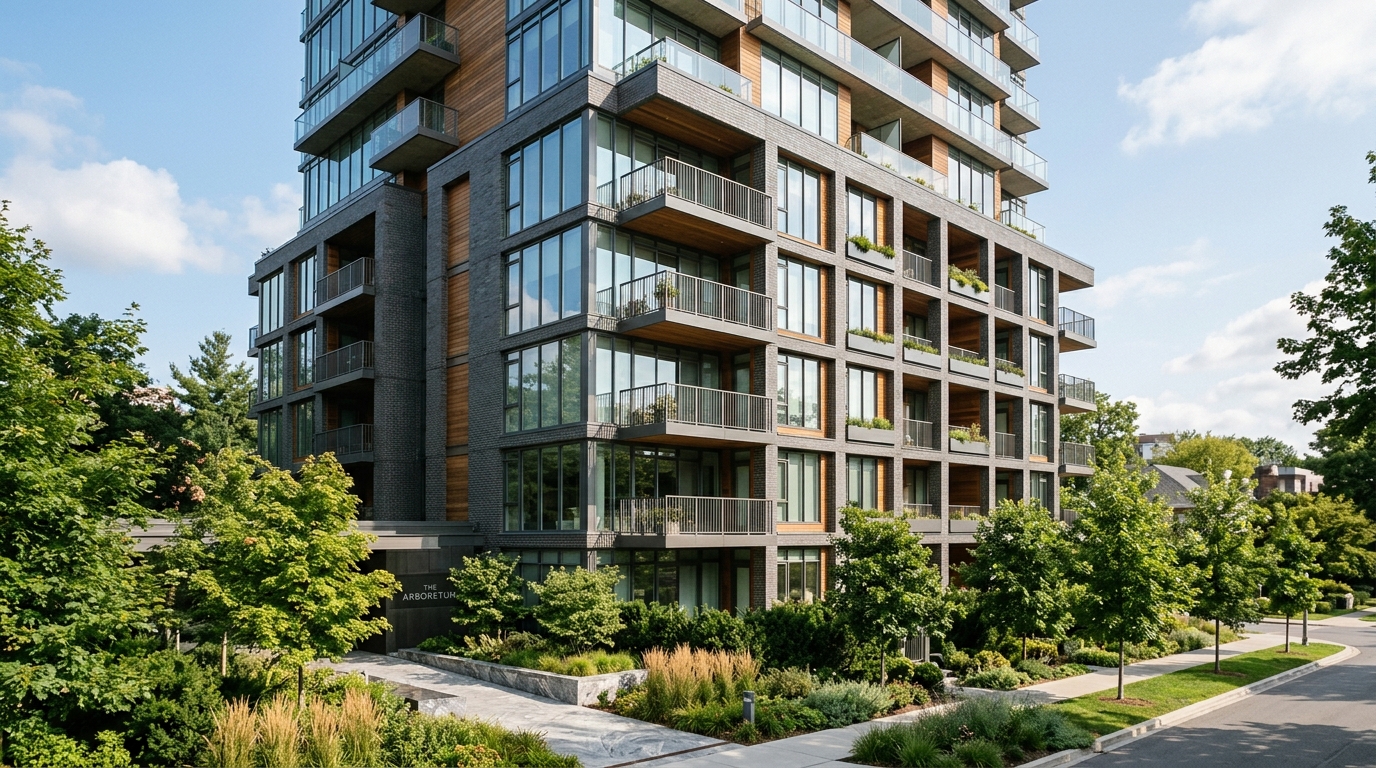
Multifamily properties are often favored by lenders due to their stable cash flows and lower historical default rates.
Typical Down Payment Requirements by Property Type
Underwriting standards vary by property type, tenant credit, and macro-economic factors. Standard commercial property down payment benchmarks across primary real estate asset classes include:
- Multifamily Properties (5+ Units): 20% to 25% down payment (75% to 80% Loan-to-Value). Highly liquid asset class backed by agency programs (Fannie Mae, Freddie Mac, FHA/HUD).
- Industrial & Warehouse Properties: 20% to 25% down payment (75% to 80% LTV). Strong fundamentals driven by e-commerce, logistics demand, and low capital expenditure requirements.
- Retail Properties: 25% to 30% down payment (70% to 75% LTV). Varies significantly based on tenant creditworthiness (NNN multi-tenant vs. single-tenant shadow anchor).
- Office Buildings: 25% to 35% down payment (65% to 70% LTV). Conservative LTV caps due to hybrid work trends, long lease roll risks, and tenant improvement (TI) capital requirements.
- Special Purpose / Hospitality (Hotels, Gas Stations, Self-Storage): 25% to 35% down payment (65% to 70% LTV, or 15% to 20% under SBA owner-occupied guidelines).
What is the Typical Down Payment for a Multifamily Loan?
Multifamily real estate (5 or more residential units) represents the most favored asset class among institutional and private commercial lenders. Because housing is an essential need, apartment buildings generate predictable cash flows and exhibit lower default rates historically than commercial space.
The typical multifamily loan down payment ranges from 20% to 25%.
Financing Programs Impacting Multifamily Equity Requirements:
- Fannie Mae & Freddie Mac Small Mortgage Loans: Agency lenders offer up to 75% or 80% LTV (requiring 20% to 25% down) for stabilized properties in medium-to-large metropolitan markets, with non-recourse terms and 30-year amortization schedules.
- FHA / HUD 223(f) Financing: Provides up to 80% to 85% LTV (requiring 15% to 20% down) for acquisition or refinancing of existing market-rate apartments, featuring 35-year fully amortizing terms.
- Conventional Bank Loans: Local regional banks typically cap apartment loans at 75% LTV (25% down), enforcing strict Debt Service Coverage Ratio (DSCR) standards of 1.25x or higher.
To evaluate basic underwriting baselines for apartment acquisitions, consult our guide to baseline commercial real estate down payment requirements.
How Much Down Payment is Needed for an Office Building?
The office sector has experienced shifting underwriting standards. Lenders evaluate office acquisitions conservatively, enforcing stricter LTV limits and requiring higher liquidity reserves.
An office building down payment generally ranges from 25% to 35% (65% to 75% LTV).
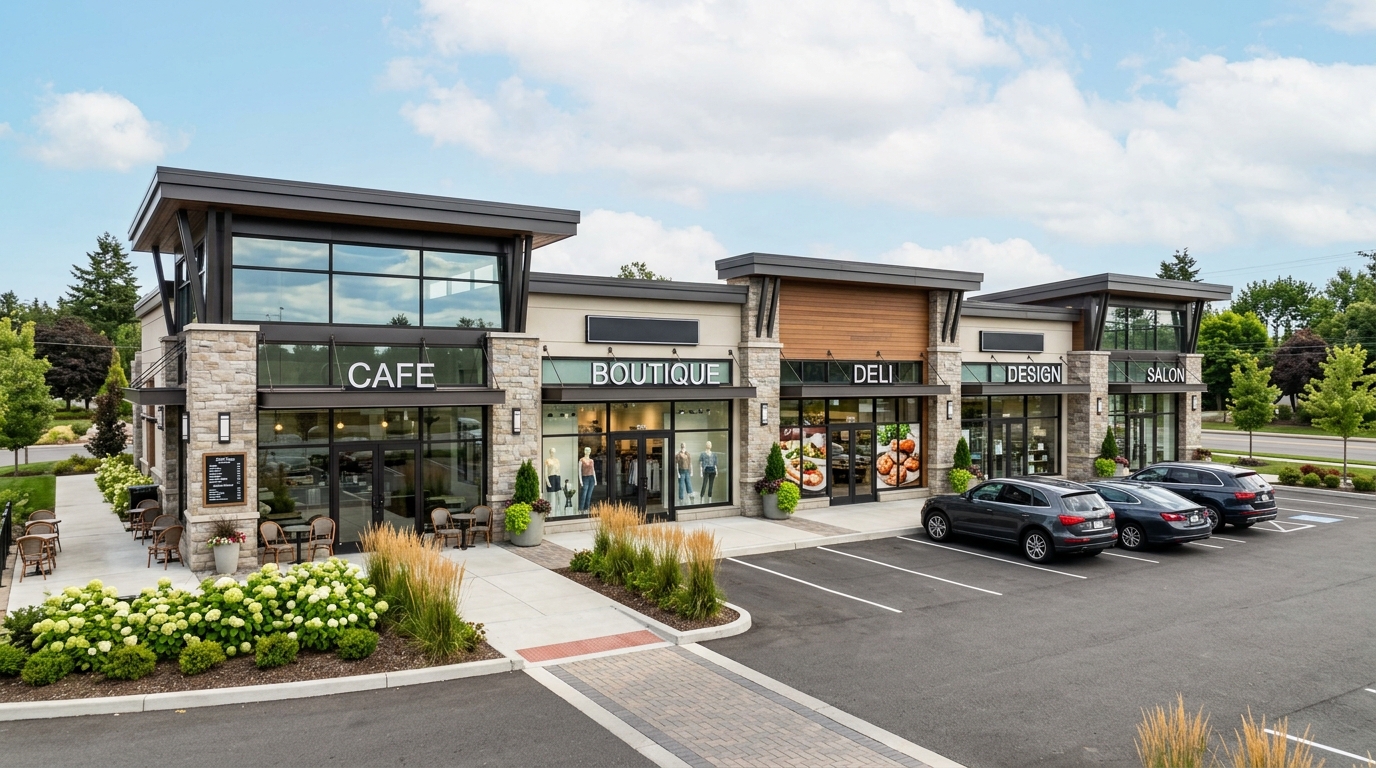
Retail property down payment requirements vary significantly based on tenant creditworthiness and lease structure.
Underwriting Factors for Office Down Payments:
- Tenant Lease Roll Schedule: Lenders review the lease expiration dates of major tenants. If major leases expire within 3 to 5 years, lenders lower the allowable loan amount, increasing the required buyer down payment.
- Tenant Improvement (TI) & Leasing Commission (LC) Reserves: Office leases require significant capital reserves for tenant build-outs and broker commissions. Lenders routinely hold back debt proceeds to fund TI/LC reserves, requiring additional upfront equity from the buyer.
- Medical Office Exemption: Medical office buildings (MOB) with high specialized capital investments benefit from lower down payment requirements—often 20% to 25% via conventional banks or 10% under SBA owner-occupant programs.
What is the Required Down Payment for a Retail Property?
Retail real estate spans a wide spectrum—from triple-net (NNN) single-tenant dollar stores to unanchored strip centers and regional shopping malls. Equity requirements depend on tenant credit and lease structure.
The standard down payment for retail property ranges from 25% to 30%.
Key Retail Categories and Equity Rules:
- Single-Tenant Net Lease (STNL / NNN): Properties occupied by national credit tenants (e.g., Walgreens, CVS, McDonald’s) with 10–15 year primary lease terms can qualify for up to 75% LTV (25% down payment) due to guaranteed corporate credit backing.
- Multi-Tenant Strip Centers: Local strip centers with non-credit unanchored tenants typically require 25% to 30% down. Lenders carefully scrutinize local economic demographics and historical sales velocity.
- Owner-Occupied Retail Space: Business owners purchasing their own retail facility (e.g., a local hardware store or restaurant owner) can utilize SBA 504 financing to reduce their down payment to 10%.
Industrial and Warehouse Down Payment Guidelines
Industrial real estate—including warehouse distribution centers, flex space, cold storage, and light manufacturing facilities—remains one of the strongest asset classes in commercial real estate.
The baseline industrial property down payment requirements range from 20% to 25% (75% to 80% LTV).
Why Industrial Assets Command Favorable Down Payment Terms:
- Low Capital Expenditure (CapEx): Unlike office buildings that require lavish lobby renovations and heavy tenant improvements, industrial warehouses feature simple functional layouts requiring minimal ongoing CapEx.
- High Tenant Retention: Industrial tenants invest heavily in specialized racking, equipment, and logistics routing, leading to higher lease renewal rates.
- Flexibility: Multi-tenant flex industrial buildings can easily adapt to changing tenant space requirements, keeping vacancy rates low.
For special-purpose industrial buildings (such as specialized processing plants or cold-storage facilities), review how lenders treat special properties in our guide covering SBA loans for special purpose properties.
Frequently Asked Questions (FAQ)
Which commercial asset class requires the lowest down payment?
Multifamily (apartment buildings) and industrial properties require the lowest conventional down payments, typically starting at 20% to 25%. However, owner-occupied commercial buildings of any asset class can qualify for 10% down payments under SBA loan programs.
Why is the down payment higher for office buildings compared to apartments?
Office buildings carry higher risk due to longer lease vacancies, shifting hybrid work patterns, and substantial capital requirements for tenant improvements and leasing commissions when re-tenanting space.
What down payment is required for a triple-net (NNN) retail property?
Triple-net properties with long-term national credit tenants (such as fast food chains or pharmacy retailers) typically require a 25% down payment (75% LTV), with some top-tier credit tenants qualifying for up to 80% LTV.
How do lenders determine down payments on mixed-use properties?
For mixed-use properties (e.g., ground-floor retail with residential apartments above), lenders analyze the revenue split. If residential rent makes up over 50% to 80% of total revenue, the lender may classify the asset as multifamily, offering higher LTVs (lower down payment).
Can I get a 10% down payment on an investment property?
Generally no. Standard investment properties (where the owner collects rent from third-party tenants) require 20% to 35% down under conventional, agency, or life insurance company guidelines. SBA 10% down loans are strictly restricted to owner-occupied business properties.