
How to Speed Up Your Commercial Real Estate Loan Closing
In commercial real estate, time is often the defining variable between closing a profitable deal and losing an acquisition to a competing buyer. Whether facing a strict 1031 exchange identification window, an expiring Purchase and Sale Agreement (PSA) deadline, or a seller demanding a rapid 30-day escrow, knowing how to speed up commercial loan closing procedures is an indispensable skill for investors, business owners, and commercial brokers.
While conventional commercial mortgages typically require 45 to 60 days to process, proactive borrowers can compress this timeline by 30% to 50% through strategic preparation, organized due diligence, and choosing the right lending partners.
7 Proactive Steps to Fast-Track Your Commercial Loan
To achieve fast closing commercial real estate loans, borrowers must eliminate friction before the lender even opens a underwriting file. Follow these seven proactive steps to fast-track your commercial loan:
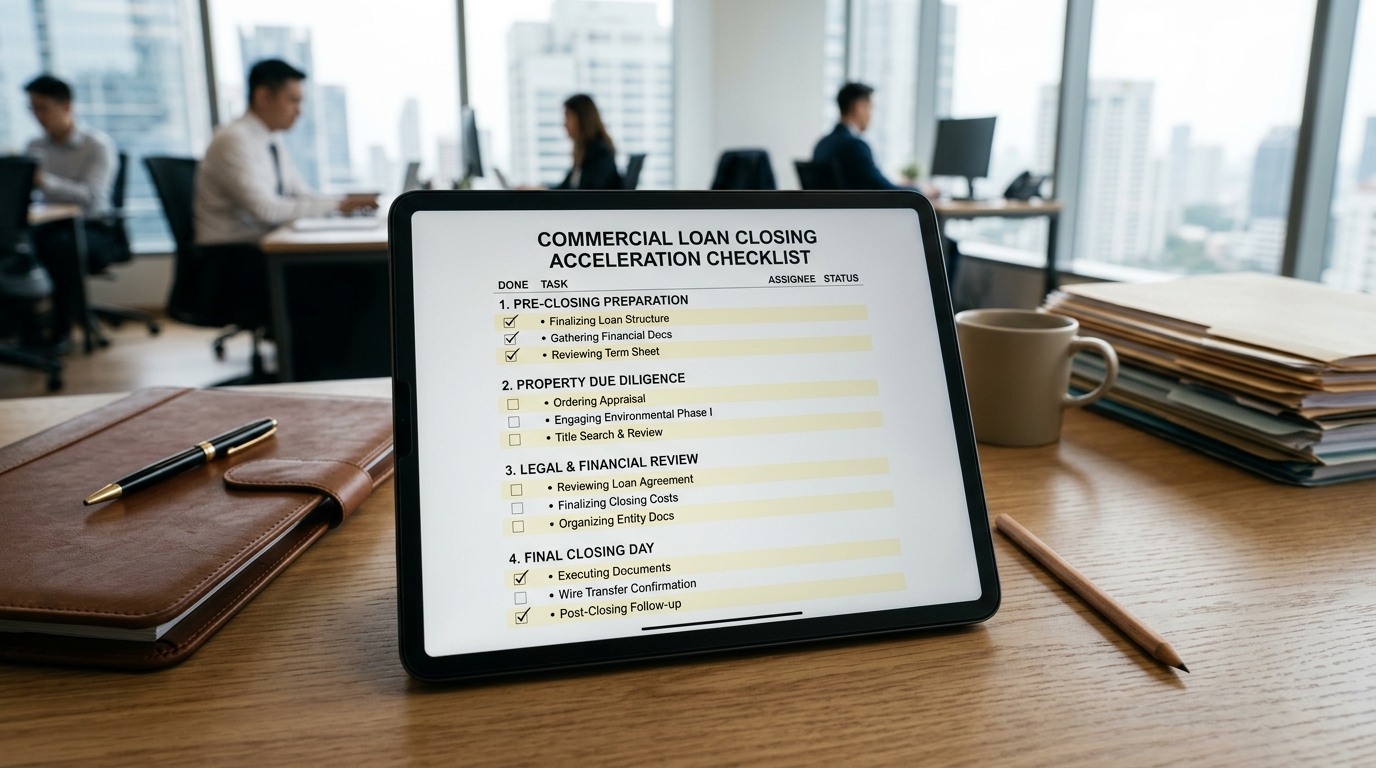
A checklist outlining seven proactive steps to fast-track your commercial loan closing.
- Assemble a Pre-Flight Due Diligence Vault: Store all organizational records, three years of tax returns, operating statements, and rent rolls in an easily accessible digital cloud folder prior to loan application.
- Order Third-Party Reports on Day One: Request that your lender order the commercial property appraisal, Phase I Environmental Site Assessment (ESA), and property condition reports immediately upon signing the term sheet.
- Engage a Lender-Approved Appraisal Management Firm: Ensure the lending institution utilizes established appraisers with local market expertise who guarantee expedited 2-to-3 week turnaround commitments.
- Pre-Clear Title and Survey Documents: Work with your title company to order the preliminary title commitment and existing ALTA survey as soon as the purchase contract is executed.
- Utilize Standardized Financial Statements: Submit financial documentation in clear, organized PDF and Excel formats using standard GAAP accounting principles to accelerate credit analysis.
- Promptly Respond to Underwriter Information Requests (RFIs): Establish a strict policy to answer all underwriter questions and satisfy document conditions within 24 hours of receipt.
- Select a Lender with Direct Credit Committee Access: Partner with regional financial institutions or private lenders where loan officers sit directly with decision-makers, eliminating multi-layered administrative delays.
The Most Common Causes of Commercial Loan Delays
Understanding what triggers delays in closing commercial loans allows deal sponsors to preemptively neutralize operational roadblocks. The majority of financing delays fall into three distinct operational categories.
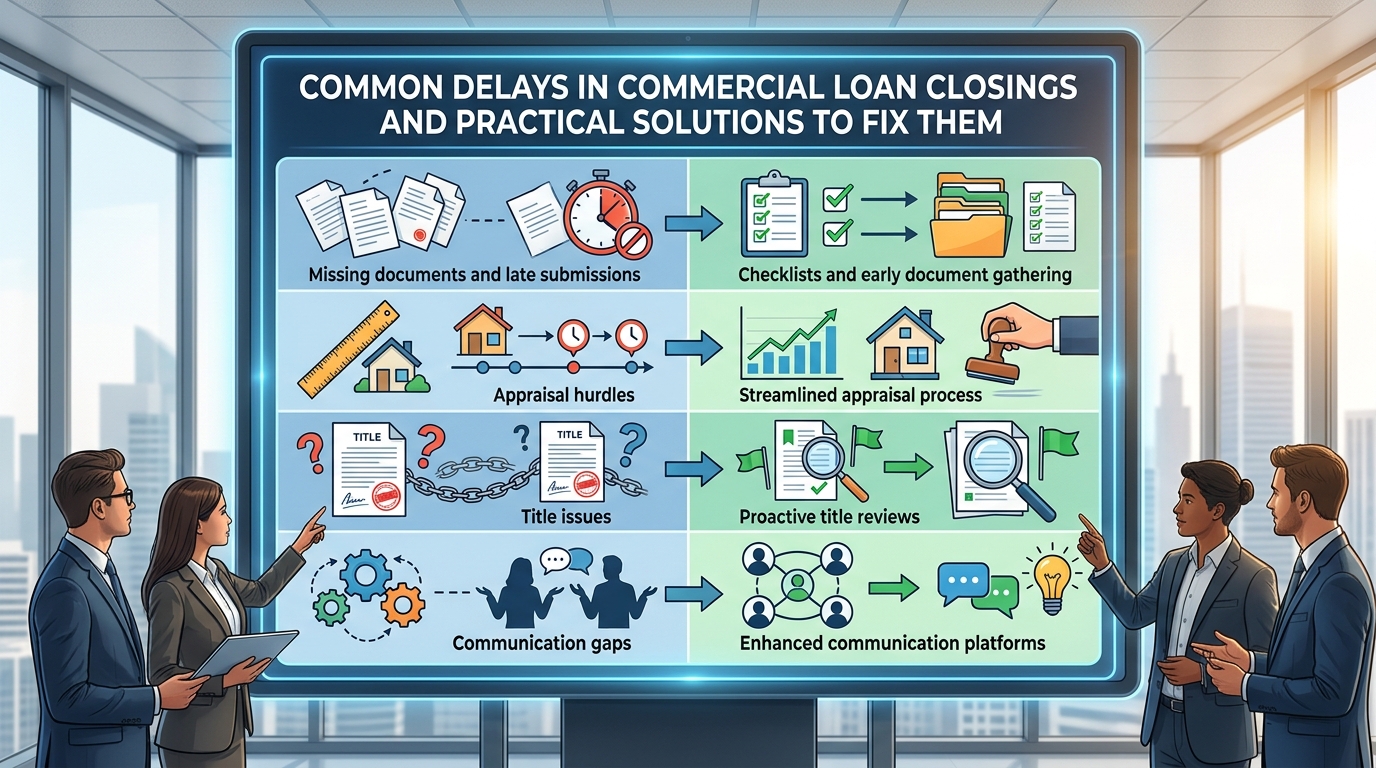
Understanding and addressing the most common causes of commercial loan delays can significantly speed up the closing process.
Missing Financial Documents
Underwriters cannot finalize credit memos without complete, verified financial documentation. Common document gaps that halt processing include:
- Unsigned or partial tax returns (missing schedules or corporate filings)
- Outdated rent rolls or operating statements older than 60 days
- Unexplained bank statement deposits or inconsistent entity ownership percentages
- Missing corporate formation documents (LLC Operating Agreements, Articles of Organization)
How to avoid it: Provide complete, full-package documentation from inception. If an operating statement shows an unexpected anomaly (e.g., a temporary spike in utility expenses), attach an explanatory memorandum upfront.
Third-Party Report Delays (Appraisals & Surveys)
Third-party vendor reports represent the single largest operational bottleneck in commercial real estate financing.
- Commercial Appraisals: Appraisers frequently require 3 to 5 weeks to inspect the asset, analyze local comparable sales, and publish a finalized valuation report.
- Environmental Reports: A Phase I ESA can take 3 to 4 weeks. If environmental historical records reveal potential contamination hazards, a Phase II intrusive test may be required, adding 30 to 60 days to the timeline.
To review specific benchmark averages and strategies for managing third-party delays, see our detailed guide on commercial appraisal turnaround times.
Title and Escrow Complications
Title defects can bring loan closings to a complete standstill right before funding. Typical title roadblocks include:
- Unsatisfied mechanic’s liens or municipal code violations against the seller
- Unrecorded easements or unclear boundary encroachments on historical surveys
- Gaps in ownership chain or delayed payoff statements from existing lienholders
How to avoid it: Request the preliminary title commitment during contract drafting. Engage escrow officers early to request payoff demands immediately upon contract execution.
Financing Options for Urgent Closings (Bridge vs. Fast-Track Lenders)
When purchase contract deadlines do not accommodate standard 45-to-60 day processing windows, selecting the appropriate capital structure is essential. Comparing capital structures highlights significant differences in speed and execution:
Commercial Bridge Loans
- Average Closing Timeline: 10 to 30 calendar days
- Primary Focus: Asset value, cash flow potential, and exit strategy rather than extensive historical borrower financials
- Best Used For: 1031 exchange replacement purchases, opportunistic acquisitions, non-stabilized properties, or urgent closing windows
Reviewing commercial bridge loan closing times illustrates how balance-sheet private debt provides maximum speed when strict closing deadlines must be met.
Fast-Track Bank & Non-Bank Programs
- Average Closing Timeline: 30 to 40 calendar days
- Primary Focus: Streamlined underwriting for low-LTV transactions or strong existing bank clients
- Best Used For: Stabilized commercial assets with strong existing cash flow and creditworthy borrowers
While conventional financing offers lower interest rates, trying to force an SBA loan or complex CMBS loan into a 30-day closing window almost always leads to contract extensions or default. Knowing when to benchmark against standard commercial loan closing times helps set realistic contractual expectations.
Pre-Flight Due Diligence Checklist for Borrowers
Before submitting your next loan application, use this pre-flight checklist to ensure your file is structured for maximum processing speed:
1. Borrower & Guarantor Information
- [ ] Three (3) years of signed personal and business tax returns (all schedules included)
- [ ] Current Personal Financial Statement (PFS) dated within 60 days
- [ ] Government-issued photo IDs for all guarantors with 20%+ ownership
- [ ] Proof of liquidity (recent 2–3 months of bank/brokerage statements)
2. Property Performance Documentation
- [ ] Year-to-date Profit & Loss (P&L) statement and balance sheet
- [ ] Three (3) years of historical year-end property operating statements
- [ ] Certified current rent roll detailing tenant names, square footage, lease terms, and monthly rents
- [ ] Copy of all active commercial lease agreements and amendments
3. Entity & Legal Package
- [ ] Certificate of Good Standing from state of entity formation
- [ ] Executed LLC Operating Agreement, Partnership Agreement, or Corporate Bylaws
- [ ] Fully executed Purchase and Sale Agreement (PSA) with all addenda
- [ ] Preliminary Title Commitment and existing boundary survey (if available)
By organizing these items into a structured digital folder prior to application, borrowers can shave up to three weeks off the underwriting timeline and position themselves for a fast, hassle-free closing.