Current Multifamily & Bridge Loan Interest Rates
Multifamily real estate remains the favored asset class for commercial lenders due to housing demand fundamentals and granular tenant credit dispersion. However, financing options for apartment buildings differ significantly based on asset stabilization. Stabilized properties secure long-term, non-recourse agency financing, while un-stabilized or value-add properties require short-term commercial bridge debt.
This guide analyzes multifamily interest rates today, agency capital options, and commercial bridge loan interest rates for repositioning strategies.
What are current multifamily interest rates today?
In 2026, multifamily interest rates today range from [CURRENT_RATE]% to [CURRENT_RATE]% for stabilized properties financed through government-sponsored enterprises (Fannie Mae and Freddie Mac) or HUD/FHA. (HUD / FHA)
Multifamily interest rates are influenced by market conditions and lender programs.
Multifamily property owners access a wide variety of capital channels depending on leverage, property size, and location:
– Agency Financing (Fannie Mae / Freddie Mac): Fixed rates between [CURRENT_RATE]% and [CURRENT_RATE]% for 5-to-10-year terms with non-recourse terms and flexible interest-only periods.
– HUD / FHA 223(f): Rates ranging from [CURRENT_RATE]% to [CURRENT_RATE]%, fixed and fully amortizing for 35 years.
– Bank & Regional Lenders: Rates between [CURRENT_RATE]% and [CURRENT_RATE]% with recourse requirements and 5-year reset schedules.
To compare how apartment capital pricing relates to broader asset classes, investors track overall commercial property loan interest rates across office, industrial, and retail debt channels.
Long-Term Multifamily Financing Options
Securing top-tier multifamily commercial mortgage rates requires matching your asset’s business plan with the appropriate institutional debt vehicle:
1. Fannie Mae DUS & Freddie Mac Optigo
Agency loans represent the gold standard for stabilized multifamily properties (5+ units).
– Loan Terms: 5, 7, 10, 12, or 15 years fixed.
– Leverage: Up to 75% – 80% LTV.
– Key Advantages: Non-recourse execution, index-matched rate locks, and interest-only options for strong DSCR assets (1.25x+).
2. HUD / FHA 223(f) Loans
Designed for long-term hold strategies, HUD financing provides unmatched leverage and term length.
– Loan Terms: Up to 35-year fixed and fully amortizing term.
– Leverage: Up to 85% LTV for market-rate properties (higher for affordable housing).
– Considerations: Longer underwriting timelines (120 to 180 days) and higher upfront MIP (Mortgage Insurance Premium) costs.
How do commercial bridge loan interest rates compare to permanent rates?
While permanent multifamily debt focuses on cash-flow stability, commercial bridge loan interest rates reflect short-term transitional risk. Bridge loans serve as interim financing to acquire, renovate, re-tenant, or stabilize commercial properties before securing long-term debt.
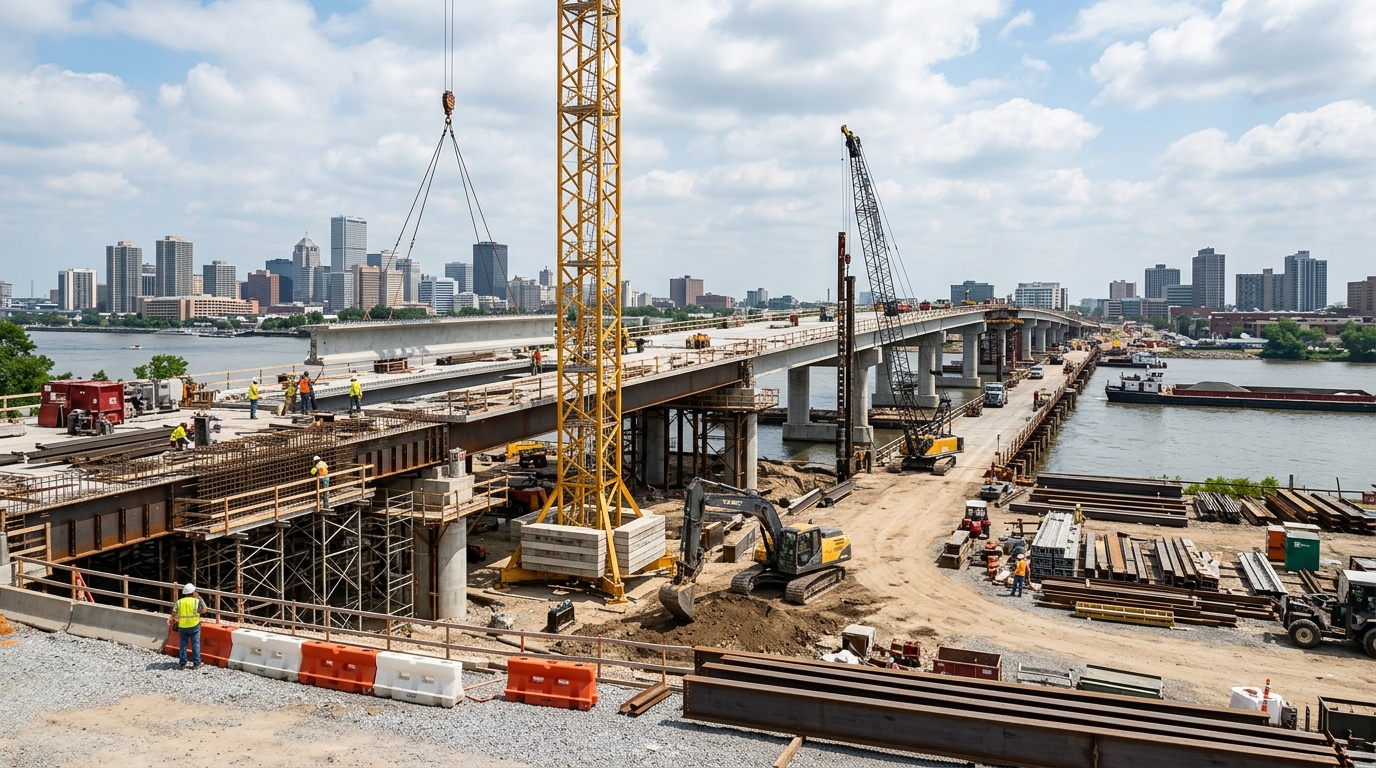
Commercial bridge loans provide crucial short-term financing for construction and property repositioning.
| Feature / Metric | Long-Term Multifamily Rates | Commercial Bridge Loan Rates |
|---|---|---|
| Typical Interest Rate | [CURRENT_RATE]% – [CURRENT_RATE]% |
[CURRENT_RATE]% – [CURRENT_RATE]% |
| Base Benchmark Index | 5/10-Yr U.S. Treasury Yield | 30-Day SOFR or Prime Rate (SOFR) |
| Lender Spread | 125 – 225 basis points | 350 – 600 basis points |
| Loan Term | 5 to 30 Years | 1 to 3 Years (plus extension options) |
| Recourse Status | Non-Recourse standard | Recourse or Partial Recourse standard |
| Payment Structure | Principal & Interest amortizing | Interest-Only (often with interest reserve) |
| Prepayment Penalty | Yield Maintenance or Defeasance | Open prepayment after 6–12 months |
Bridge debt carries interest rates that are typically 200 to 400 basis points higher than permanent agency debt. However, bridge loans provide funding for capital expenditures (CapEx) and allow flexible prepayment once property stabilization is achieved.
Bridge Financing Uses: Value-Add and Short-Term Capital
Bridge financing rates commercial property investors utilize are designed for specific transitional scenarios:
- Value-Add Apartment Repositioning: Funding property acquisitions where unit renovations and operational turnarounds will drive rent growth.
- Lease-Up Phase Capital: Financing newly constructed properties that need 6 to 18 months to achieve 90%+ occupancy required for agency takeout debt.
- Maturity / Recapitalization Bridges: Providing temporary debt to payoff expiring loans while executing property sales or long-term refinancing.
Once value-add renovations are complete and cash flows stabilize, sponsors transition away from bridge debt by securing permanent debt or evaluating commercial real estate refinance rates to capture lower interest costs.
Qualifying for Multifamily and Bridge Loans
Lenders evaluate distinct underwriting criteria for permanent vs. bridge financing:
- Permanent Multifamily Debt: Underwriting focuses primarily on historical property cash flows, T-12 operating statements, rent rolls, and minimum DSCR thresholds (1.25x+).
- Bridge Debt: Underwriting focuses on sponsor track record, liquidity reserves, realistic pro-forma budgets, and clear exit strategies (takeout refinance or property sale). Lenders often require sponsors to maintain net worth equal to 100% of the loan amount and liquid assets equal to 6 to 12 months of debt service.
Investors executing medium-term holding periods often evaluate hybrid commercial mortgage rates to balance short-term interest costs against long-term rate protection.
Frequently Asked Questions (FAQ)
What is the minimum unit count for commercial multifamily rates?
Commercial multifamily rates apply to residential properties with 5 or more units. Properties with 1 to 4 units are underwritten under residential mortgage guidelines.
What is an interest reserve on a bridge loan?
An interest reserve is a portion of loan proceeds set aside at closing to cover monthly interest payments during property renovation or lease-up phases when net cash flow is insufficient.
Can bridge loans cover renovation costs?
Yes, bridge loans are structured to fund up to 80%–100% of property renovation budgets (CapEx) through draws disbursed as construction work is completed.
How do I exit a commercial bridge loan?
The two primary exit strategies for a bridge loan are securing permanent long-term refinancing (such as Fannie Mae or bank debt) once the property is stabilized, or selling the asset.