The Complete Guide to Commercial Property Loans
Navigating the landscape of commercial property loans can feel overwhelming, whether you are acquiring your first retail building, refinancing a industrial warehouse, or expanding a multi-tenant office portfolio in 2026. Unlike residential real estate financing, which focuses primarily on personal borrower income and personal credit scores, commercial property financing places equal—if not greater—weight on the physical asset, its tenant cash flows, and its overall debt coverage capacity.
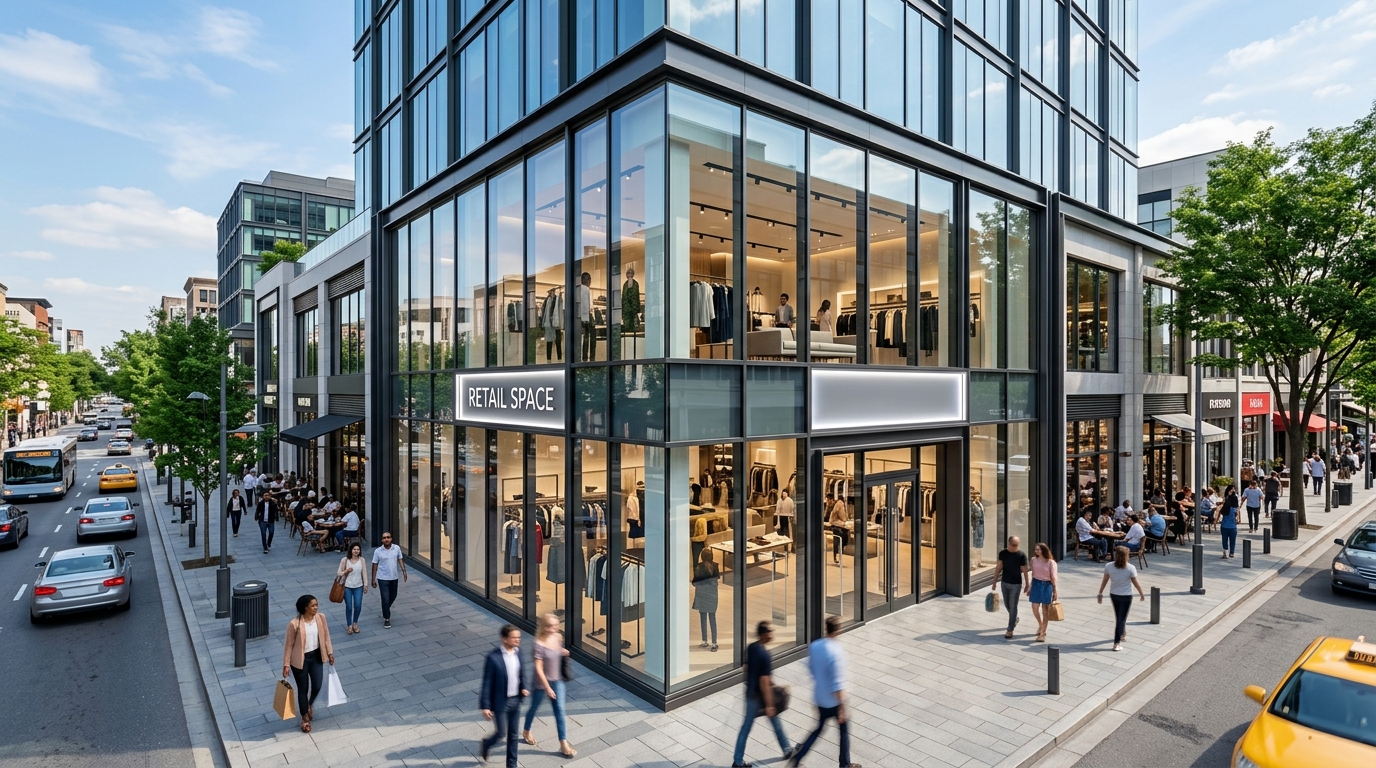
Commercial building loans are essential for acquiring and developing modern retail properties, supporting business growth and investment.
Understanding how commercial real estate lending is structured enables real estate investors and business owners to secure competitive rates, optimize leverage, and structure debt that matches their long-term hold strategies. Before committing to a lender, it is critical to compare detailed commercial real estate financing options tailored to your specific asset type and investment timeline.
What Is a Commercial Property Loan?
A commercial property loan—often referred to as a commercial property mortgage or commercial building loan—is a debt instrument secured by real estate used exclusively for business or income-generating purposes. These properties include retail centers, office complexes, industrial warehouses, multi-family apartment buildings (typically 5+ units), hospitality venues, and mixed-use developments.
Unlike residential mortgages that are routinely sold to government-sponsored entities like Fannie Mae or Freddie Mac, commercial mortgages are largely retained on lender balance sheets or packaged into commercial mortgage-backed securities (CMBS). Because commercial properties carry distinct operating risks, underwriting standards are tailored around income performance, tenant lease terms, and local market absorption rates.
How much down payment is required for a commercial building loan?
For most traditional commercial mortgages, lenders require a down payment ranging between 15% and 30% of the property’s purchase price or appraised value, translating to a Loan-to-Value (LTV) ratio of 70% to 85%.
- Owner-Occupied Commercial Properties: If your business occupies 51% or more of the building’s usable square footage, programs like SBA 504 or SBA 7(a) can allow down payments as low as 10% (90% LTV).
- Investor / Income-Producing Assets: Non-owner-occupied properties where tenants generate the rental income usually require 20% to 25% down for conventional bank debt, and 25% to 35% down for CMBS or private lender structures.
- Value-Add / Opportunistic Acquisitions: Properties with lower occupancy or requiring extensive renovations may require 30% or more down unless backed by specialized short-term debt.
Commercial vs. Residential Mortgages
Understanding key operational and structural distinctions between residential and commercial loans is essential for investors transitioning into commercial real estate:
| Characteristic | Residential Mortgages | Commercial Property Loans |
|---|---|---|
| Primary Collateral | Single-family, 1–4 unit residential | Retail, office, industrial, multi-family (5+ units) |
| Primary Underwriting Focus | Debt-to-Income (DTI) & personal credit | Net Operating Income (NOI) & DSCR |
| Standard Term Lengths | 15-year or 30-year fully amortizing | 5-year, 7-year, or 10-year loan terms |
| Amortization Period | 15 to 30 years | 20 to 30 years (with balloon payments) |
| Prepayment Penalties | Rare (prohibited on primary residences) | Common (Yield Maintenance, Defeasance, Step-Down) |
| Borrower Entity | Individuals / Spouses | LLCs, Corporations, LPs, or Trusts |

Key differences between commercial and residential mortgages include collateral, underwriting focus, and loan terms, crucial for investors to understand.
Key Use Cases for Commercial Financing
Commercial real estate financing covers a diverse set of strategic capital needs. Identifying your property’s lifecycle stage helps narrow down the appropriate funding vehicle.
Building Acquisition & Refinancing
Acquiring stabilized commercial buildings requires capital options that lock in stable debt service costs over 5-to-10-year horizons. Investors acquiring stabilized multi-tenant retail strips or single-tenant triple-net (NNN) properties utilize conventional mortgages or agency debt to maximize net cash flows.
Refinancing is equally common in commercial real estate:
* Rate-and-Term Refinancing: Replaces existing debt to lower interest payments or extend impending balloon maturities.
* Cash-Out Refinancing: Allows owners who have built substantial equity through property appreciation or net operating income growth to extract tax-free liquidity to acquire additional assets.
Construction and Owner-Occupied Real Estate
- Ground-Up Construction & Major Renovations: Short-term commercial construction loans fund ground-up builds or adaptive reuse projects. These interest-only, draw-based structures transition into permanent mini-perm or conventional mortgages once certificate of occupancy (CO) and stabilization milestones are achieved.
- Owner-Occupied Facilities: Business owners purchasing their own operational headquarters can leverage long-term amortizing loans to build balance sheet equity rather than paying monthly lease rents to third-party landlords.
Before submitting financial documentation for any acquisition or refinance, make sure to review commercial underwriting standards to ensure your balance sheet meets debt service coverage and liquidity criteria.
Overview of the Commercial Lending Ecosystem
The market for commercial property financing consists of several distinct lender classes, each offering unique trade-offs regarding interest rates, speed, loan terms, and flexibility.
-
Commercial Banks & Community Banks:
* Best For: High-quality stabilized properties and borrowers with established banking relationships.
* Key Features: Competitive interest rates, recourse requirements, flexible relationship pricing, 5-to-10-year terms with 20-to-25-year amortization. -
Credit Unions:
* Best For: Local commercial transactions ($500,000 to $5,000,000) seeking lower fees and personalized service.
* Key Features: Strong regional market focus, lower loan fees, conservative LTV thresholds, and competitive fixed rates. -
Life Insurance Companies:
* Best For: Prime, institutional-quality assets (Class A retail, industrial, office) with blue-chip tenants and low LTVs (<65%).
* Key Features: Lowest long-term fixed rates in the market, long loan terms (10–25 years), strict underwriting, non-recourse execution. -
CMBS (Conduit Lenders):
* Best For: Larger transactions ($2,000,000+) seeking non-recourse funding and higher leverage on cash-flowing assets.
* Key Features: Fixed-rate debt securitized into bonds, standardized loan structures, defeasance yield penalties, strict secondary market rules. -
Private Capital & Bridge Lenders:
* Best For: Time-sensitive acquisitions, opportunistic turnarounds, or distressed properties needing short-term capital.
* Key Features: High execution speed (14–30 days), higher interest rates, flexible asset-based underwriting, 1-to-3-year loan terms.
To monitor dynamic pricing across these provider categories, be sure to check current commercial interest rates regularly when building your financial models.
How Commercial Mortgages Are Structured
Commercial property mortgages differ drastically from home loans in how principal payoff and maturity timelines interact.
Why do commercial mortgages have balloon payments?
Commercial mortgages frequently feature balloon payments because lenders generally prefer not to commit capital at fixed or narrow floating spreads for 30 consecutive years due to interest rate risk and inflation dynamics.
A typical commercial loan structure features:
* Loan Term: 5 to 10 years (the period over which monthly payments are made).
* Amortization Period: 25 to 30 years (the schedule used to calculate regular monthly principal and interest payments).
Because monthly payments are calculated using a 25-year schedule but the loan matures after 5 or 10 years, the remaining unpaid balance does not reach zero at the end of the term. The remaining principal balance is due as a single, lump-sum balloon payment. Borrowers usually satisfy this balloon liability by:
1. Refinancing into a new commercial loan structure.
2. Selling the property and clearing the principal balance with proceeds.
3. Exercising an extension option if pre-negotiated within the initial loan agreement.
+-----------------------------------------------------------------------+
|                       TYPICAL COMMERCIAL LOAN STRUCTURE                |
|                                                                       |
|   Monthly Payments (Years 1 - 10): Calculated on 25-Year Amortization  |
|   [=== Payment ===] [=== Payment ===] [=== Payment ===] ...          |
|                                                                       |
|   End of Year 10 Maturity: Remaining Principal Balance Due           |
|   [==================== BALLOON PAYMENT DUE =====================]    |
+-----------------------------------------------------------------------+
Amortization and Term Lengths
- Interest-Only (I/O) Periods: High-yield investor loans or CMBS executions often include 1 to 3 years of interest-only payments at the start of the loan term, reducing debt service burden during property stabilization.
- Recourse vs. Non-Recourse:
- Recourse Debt: Lenders can seize personal assets of the guarantors if property cash flow defaults fail to satisfy remaining debt obligations.
- Non-Recourse Debt: Lenders can only look to the underlying property collateral and rental proceeds in the event of default, subject to standard “bad-boy” carve-outs (e.g., fraud, environmental violations, unapproved debt).
Next Steps: Choosing Your Financing Path
Securing the right commercial property financing requires matching your asset’s cash flow, holding period, and risk tolerance with the appropriate capital structure:
- Define Your Timeline: Are you holding the asset for 10+ years or executing a 24-month value-add turnaround?
- Calculate Your Target DSCR: Ensure your property’s net operating income supports at least 1.25x annual debt coverage.
- Assemble Your Financial Package: Prepare three years of property operating statements, tax returns, tenant lease summaries, and personal financial statements.
- Compare Lender Proposals: Evaluate total cost of capital including origination fees, legal costs, prepayment penalties, and rate structures.
Frequently Asked Questions (FAQ)
What is the average term for a commercial property loan?
The most common loan terms for commercial real estate mortgages are 5, 7, and 10 years, structured with 20- to 30-year amortization schedules.
What is a good DSCR for commercial property lending?
Lenders typically require a minimum Debt Service Coverage Ratio (DSCR) of 1.25x, meaning the property’s Net Operating Income (NOI) must be 25% higher than its annual principal and interest debt service payments.
Can I get a commercial building loan through an LLC?
Yes. In fact, most commercial lenders require borrowers to hold title in a Special Purpose Entity (SPE), such as a limited liability company (LLC), to isolate property liabilities from personal assets.
How long does it take to close a commercial mortgage?
Traditional bank and SBA commercial loans generally take 45 to 90 days to close due to commercial appraisals, environmental reports (Phase I ESA), and property title reviews. Private bridge loans can close in 14 to 30 days.