

Commercial Mortgage Broker Fees: Standard Rates, Structures & Value Proposition
Introduction: The Role of Debt & Equity Intermediaries in CRE
Navigating commercial real estate debt markets requires evaluating hundreds of prospective lending institutions—including commercial banks, credit unions, life insurance companies, CMBS conduits, private debt funds, and SBA lenders. For real estate developers, owner-occupiers, and private equity investors, securing optimal debt terms often involves engaging financial intermediaries.
Commercial mortgage brokers act as capital advisors, packaging loan requests, running competitive capital auctions, and negotiating term sheet covenants on behalf of borrowers.
Understanding commercial mortgage broker fees, retainer expectations, and dual-compensation rules ensures borrowers receive transparent representation while maximizing net investment returns.
What Fees Do Commercial Mortgage Brokers Charge?
Commercial mortgage brokers typically charge a success-based placement fee ranging from 1.0% to 2.0% (100 to 200 basis points) of the total loan commitment upon successful loan closing. On a $5,000,000 commercial debt placement, standard broker compensation ranges between $50,000 and $75,000.

Commercial mortgage broker fees typically scale inversely with the transaction deal size, meaning larger loans often incur a lower percentage fee.
Broker fee percentages scale inversely with deal size. Larger institutional debt transactions qualify for reduced percentage fee tiers.
For an overarching review of all capital transaction charges, review our master commercial real estate loan fee guide.
Broker Fee Benchmark Scale Table
The table below outlines standard commercial mortgage broker fee schedules across transaction size brackets in 2026:
| Deal / Loan Size Bracket | Standard Fee Percentage | Benchmark Commission ($) | Primary Capital Focus |
|---|---|---|---|
| Under $2,000,000 | 1.50% – 2.00% | $20,000 – $40,000 | Small Balance / SBA / Local Banks |
| $2,000,000 – $5,000,000 | 1.00% – 1.50% | $25,000 – $75,000 | Regional Banks / Middle Market Bridge |
| $5,000,000 – $15,000,000 | 0.75% – 1.00% | $50,000 – $150,000 | Debt Funds / Life Cos / CMBS |
| $15,000,000+ (Institutional) | 0.50% – 0.75% | $100,000+ | Institutional Syndications / Life Cos |
Fee Structures & Payment Models
Commercial debt advisors utilize three primary compensation structures depending on transaction complexity and marketing scope.
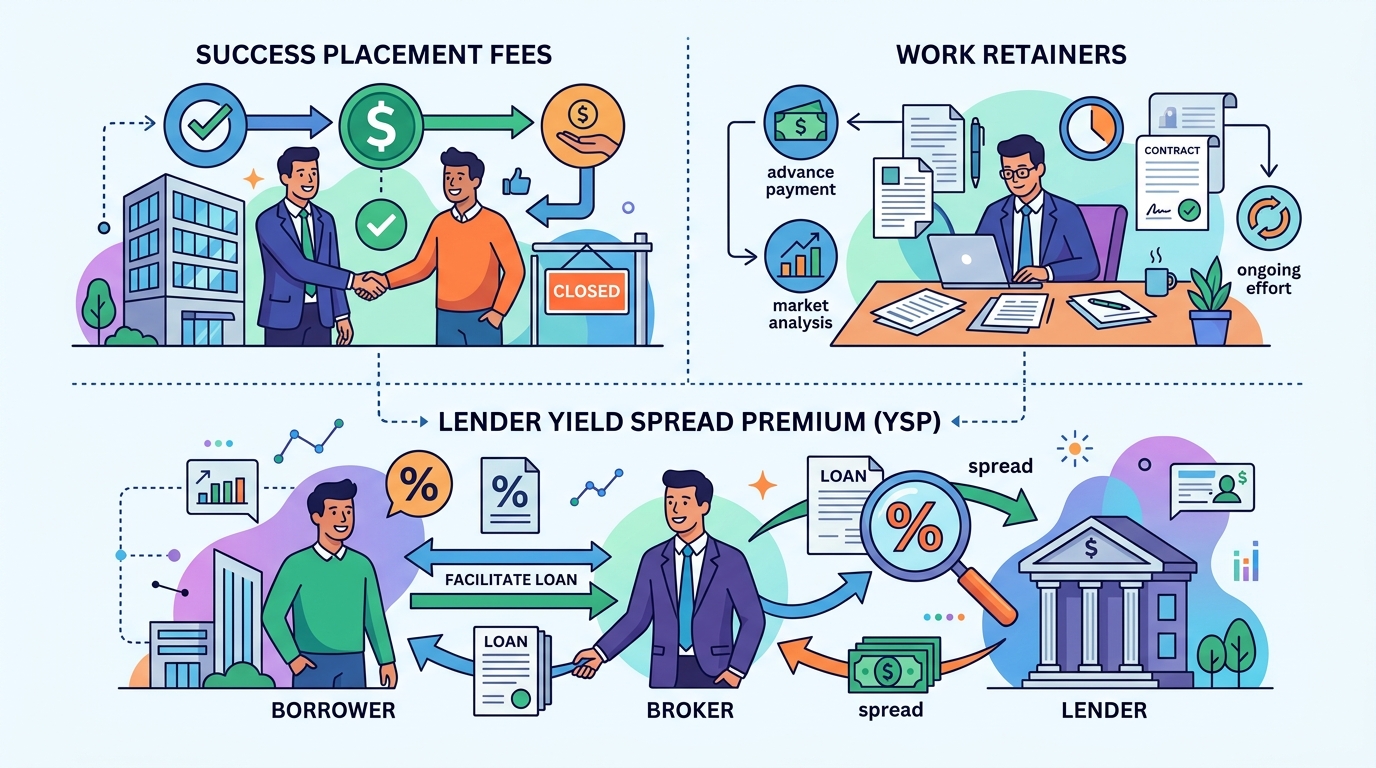
Commercial mortgage brokers primarily utilize success-based placement fees, but may also incorporate work retainers or lender-paid yield spread premiums depending on the transaction.
1. Success-Based Placement Fees
The vast majority of commercial broker agreements operate on a pure success fee basis. The broker receives compensation only if the loan closes and funds.
- Payment Mechanics: The placement fee is listed on the final ALTA settlement statement and paid directly from gross loan proceeds at settlement.
- Borrower Alignment: Alignment is high; if credit committee approval fails or the deal falls apart during due diligence, the borrower owes zero placement fees.
2. Work Retainers & Upfront Underwriting Retainers
For highly complex, distressed, or specialized capital requests (e.g., ground-up construction, non-recourse mezzanine debt, or heavy value-add bridge capital), brokers may request an upfront work retainer ($2,500 to $10,000).
- Purpose: Covers deal packaging, financial model creation, offering memorandum (OM) drafting, and initial lender distribution.
- Credit at Closing: Standard broker engagement contracts specify that 100% of the upfront work retainer is credited back against the final success fee upon loan funding.
3. Lender Yield Spread Premiums (YSP) & Compensation Transparency
In certain small-balance commercial loan markets, brokers may receive compensation directly from the lender via a Yield Spread Premium (YSP) or lender rebate fee.
- Dual Compensation Warning: Full financial disclosure is required. Borrowers should ensure their broker contract explicitly addresses compensation transparency. If a broker receives a fee from the lender, that amount must offset or reduce the placement fee charged to the borrower.
To evaluate how direct lender points interact with broker fees, see our comparison on direct lender origination points versus broker fees.
Direct Lender Sourcing vs. Hiring a Commercial Broker
A recurring strategic decision for CRE investors is whether to source debt directly with banks or hire an intermediary.

While brokers charge a fee, their expertise can lead to a higher net ROI for borrowers through better interest rates, increased loan proceeds, and optimized covenants.
Evaluating Net ROI: Does a Broker Pay for Itself?
While paying a 1.0% broker placement fee increases upfront transaction friction, an experienced mortgage broker often delivers a net positive financial return through superior deal execution:
- Interest Rate Reduction: A broker creating a competitive bidding war among 15 targeted lenders can frequently lower interest rate quotes by 25 to 50 basis points (0.25% to 0.50%). On a 10-year term, a 25 bps rate reduction yields interest savings that far exceed the 1% upfront placement fee.
- Increased Loan Proceeds (LTV): Brokers understand specific lender underwriting limits, frequently securing higher leverage (e.g., 75% LTV vs. 65% LTV), reducing required equity capital.
- Covenant Optimization: Brokers negotiate flexible prepayment terms, reduced recourse guarantees, and capped legal fees.
When to Go Direct vs. When to Hire a Broker
- Go Direct When: You are refinancing a core asset with your existing relationship bank, seeking low leverage (under 50% LTV), and possess full internal capital markets expertise.
- Hire a Broker When: Sourcing complex bridge or construction debt, entering new geographic markets, seeking non-recourse CMBS or Life Co capital, or requiring fast execution under tight contract deadlines.
For comprehensive guidance on navigating financing applications, read our resource on sourcing capital through commercial intermediaries.
Key Terms in Commercial Broker Engagement Agreements
Before engaging a commercial mortgage broker, borrowers must review the terms of the formal Broker Engagement Agreement.
Critical Contract Clauses
- Exclusivity Period: Grants the broker exclusive rights to source debt for a specified window (typically 60 to 90 days). Avoid signing open-ended exclusivity agreements exceeding 90 days.
- Lender Protection List (Tail Clause): Protects the broker’s fee for 6 to 12 months post-contract expiration if the borrower closes a loan with a lender specifically introduced by the broker during the representation period.
- Fee Cap & Net Proceeds Threshold: Establishes minimum loan proceeds and maximum interest rate parameters required for the broker to earn their success fee.
Frequently Asked Questions
What fees do commercial mortgage brokers charge?
Commercial mortgage brokers charge a success placement fee ranging from 1.0% to 2.0% of the loan amount upon closing. On larger institutional deals ($15M+), placement fee rates scale down to 0.50%–0.75%. Certain specialized assignments may include an upfront work retainer ($2,500–$10,000) credited back at funding.
Are commercial mortgage broker fees tax deductible?
Under IRS tax guidelines, commercial mortgage broker placement fees are capitalized as financing costs and amortized on a straight-line basis over the life of the loan term. They cannot be fully deducted as an immediate expense in the year paid.
Who pays the commercial mortgage broker fee—borrower or lender?
In commercial real estate, the borrower pays the broker fee in the vast majority of transactions. The fee is itemized on the final ALTA settlement statement and funded directly from loan proceeds at closing.
Conclusion: How to Select and Negotiate Intermediary Terms
To maximize the value of hiring a commercial debt advisor, borrowers should interview multiple brokerage firms, require proof of recent deal closings in the target asset class, and clearly define fee structures in writing before signing engagement letters.
For actionable steps on reviewing engagement contracts, consult our guide on how to negotiate broker engagement agreements.