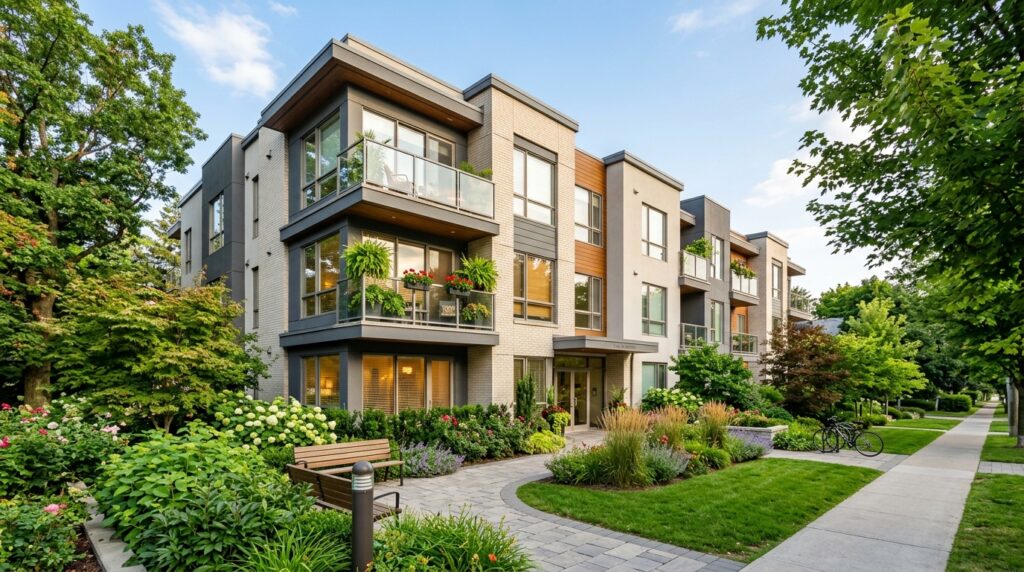
Multifamily Mortgage Rates: Financing Options for Apartments
Multifamily real estate remains the cornerstone of commercial property investing, benefitting from consistent housing demand, favourable agency liquidity, and strong historical risk-adjusted returns. Whether acquiring a 5-unit residential complex, syndicating a 100-unit apartment building, or refinancing a stabilized portfolio, securing optimal multifamily mortgage rates is critical to maximizing net operating income (NOI) and cash-on-cash yields.
This guide provides a comprehensive breakdown of current apartment building loan rates, comparing agency debt programs (Fannie Mae, Freddie Mac, HUD/FHA), conventional bank loans, private bridge financing, and key underwriting requirements.
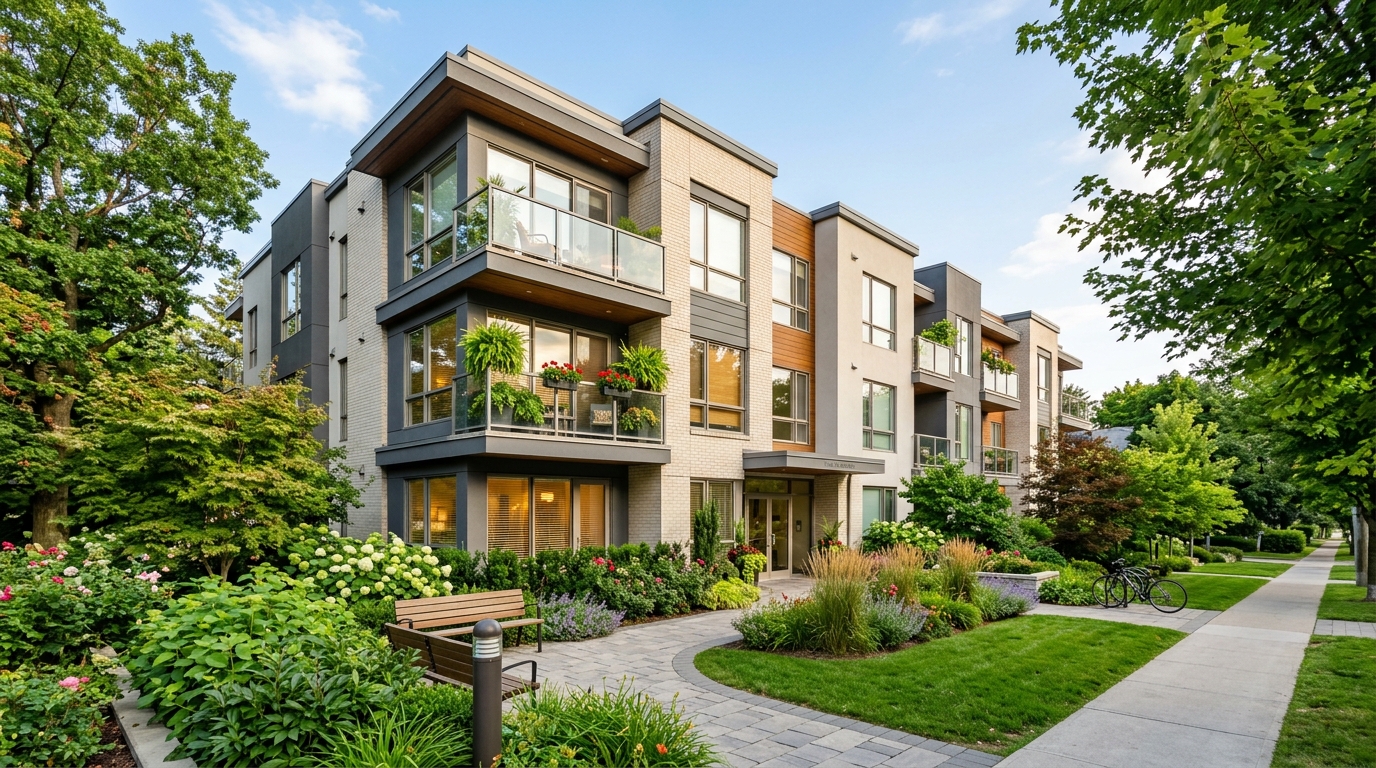
Multifamily mortgage rates are crucial for financing apartment buildings, impacting investment returns.
What are current multifamily mortgage rates?
Direct Answer: Current multifamily mortgage rates are competitive commercial interest rates available for 5+ unit residential properties, typically ranging between 150 and 275 basis points over baseline U.S. Treasury yields. (U.S. Treasury yields) Rates vary based on agency debt eligibility, loan-to-value (LTV) ratio, Debt Service Coverage Ratio (DSCR), and property location.
Because apartment buildings are backed by diversified multi-tenant rental income, lenders view multifamily real estate as a low-risk commercial asset class. As a result, commercial apartment financing rates are generally lower than interest rates charged on office, retail, or hospitality properties.
To evaluate how apartment loan terms compare against wider commercial real estate sectors, investors can compare to broader commercial rates across major debt channels.
Agency Financing: Fannie Mae, Freddie Mac, and HUD/FHA
Government-Sponsored Enterprises (GSEs)—specifically Fannie Mae and Freddie Mac—alongside HUD/FHA loan programs, provide the vast majority of long-term debt liquidity for stabilized multifamily assets.
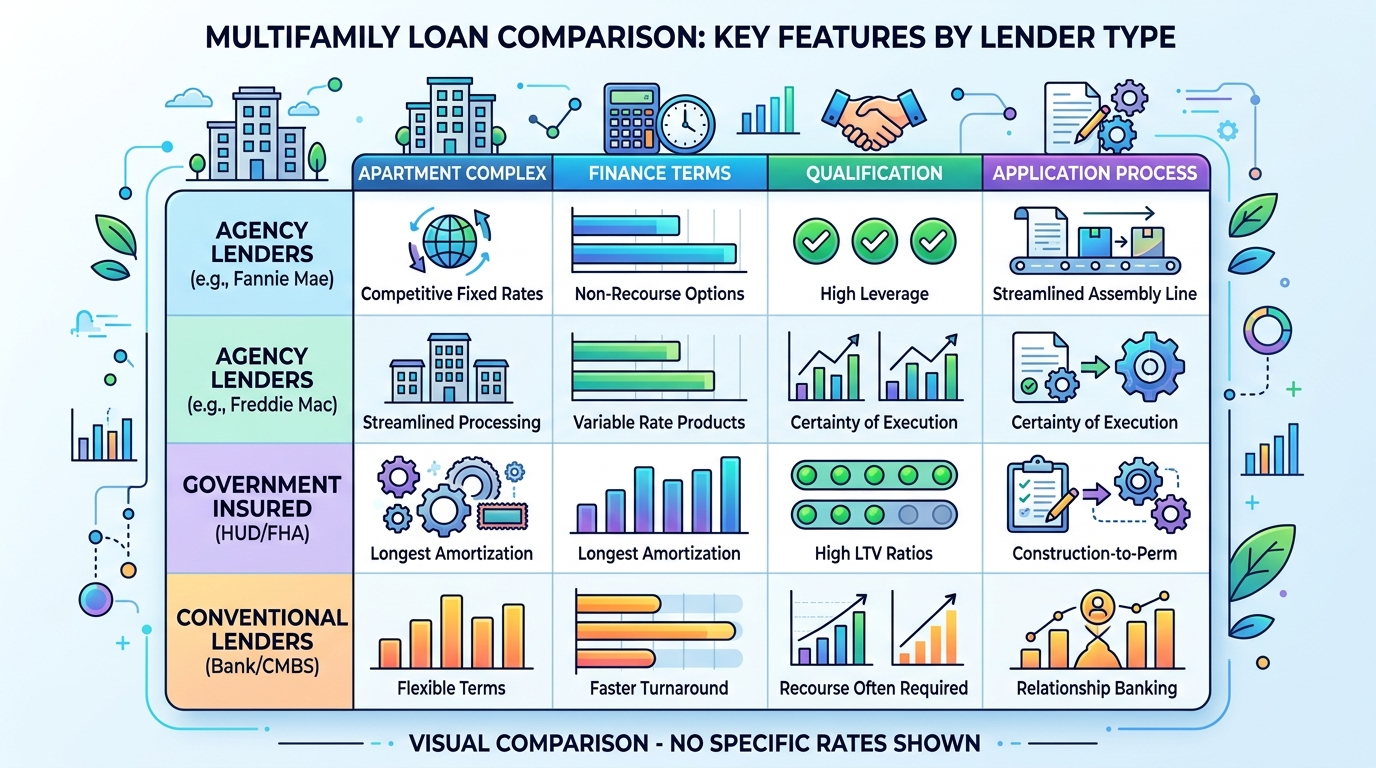
Agency financing from Fannie Mae, Freddie Mac, and HUD/FHA offers distinct advantages for multifamily loans.
Agency Debt Program Comparison
| Feature / Metric | Fannie Mae Multifamily | Freddie Mac Optigo | HUD / FHA 223(f) |
|---|---|---|---|
| Minimum Property Units | 5+ residential units | 5+ residential units | 5+ residential units |
| Loan Term | 5 to 30 years fixed | 5 to 10+ years fixed | Up to 35 years fixed (fully amortizing) |
| Max Loan-to-Value (LTV) | Up to 75% – 80% LTV | Up to 75% – 80% LTV | Up to 80% – 85% LTV |
| Min Debt Coverage (DSCR) | 1.25x DSCR | 1.25x DSCR | 1.17x – 1.20x DSCR |
| Recourse Status | Non-recourse (standard carve-outs) | Non-recourse (standard carve-outs) | Non-recourse |
| Primary Advantage | Flexible execution & competitive spreads | Strong small-balance loan (SBL) programs | Longest fixed terms & highest LTV limits |
Key Benefits of Agency Multifamily Loans
- Non-Recourse Debt Protection: Agency loans feature non-recourse execution, limiting borrower personal liability to standard “bad-boy” carve-outs (fraud, environmental indemnification, misappropriation).
- Extended Amortization Schedules: Agency programs offer 30-year amortization periods (and up to 35 years for HUD/FHA), reducing monthly principal payments and boosting property cash flow.
- Supplemental Loan Structures: Fannie Mae and Freddie Mac permit borrowers to place supplemental second mortgages behind existing agency debt, facilitating future equity extraction without refinancing primary loans.
Conventional Bank Loans vs. Private Multifamily Financing
While agency programs dominate stabilized apartment financing, conventional banks and private bridge lenders serve critical niches across short-term, local, or value-add transactions.
Conventional Commercial Bank Loans
Local, regional, and national commercial banks offer flexible apartment loan structures for properties requiring smaller debt amounts ($500,000 to $5,000,000) or unique property profiles that fall outside agency parameters.
- Advantages: Lower upfront closing costs, faster closing timelines (30 to 45 days), and personal relationship underwriting.
- Tradeoffs: Typically recourse debt requiring personal guarantees, shorter fixed terms (5 to 10 years), and strict depository balance requirements.
Private Debt & Bridge Lenders
Private capital lenders provide short-term (1 to 3 year) bridge financing for non-stabilized multifamily properties undergoing repositioning, structural renovations, or lease-up execution.
- Advantages: Flexible underwriting based on “as-stabilized” future value, quick funding speed, and interest-only payment structures during renovation phases.
- Tradeoffs: Higher interest rates and origination fees (1% to 2% points) compared to permanent agency debt.
To model monthly debt payments and stress-test occupancy levels across different interest rate scenarios, real estate sponsors can run multifamily cash flow models.
Qualification Requirements for Apartment Building Loans
Securing optimal apartment building loan rates requires meeting strict property performance and borrower balance sheet benchmarks.
Core Underwriting Criteria
- Debt Service Coverage Ratio (DSCR): Lenders require property Net Operating Income (NOI) to exceed annual debt service payments by 1.25x or higher (1.20x for top-tier agency markets).
- Occupancy Stability: Permanent agency loans require properties to demonstrate sustained physical occupancy of 90% or higher for at least 90 consecutive days prior to closing.
- Borrower Net Worth & Liquidity: Lenders require borrower key principals to maintain a combined net worth equal to or greater than the total loan amount, along with post-close liquid cash reserves equal to 6 to 9 months of debt service.
- Property Experience: Sponsors must demonstrate prior experience owning or managing multifamily assets of similar unit count and scale.
- Equity Capital Harvesting: Investors seeking capital extraction through equity gains can evaluate cash-out options for apartment buildings to fund portfolio expansion.