Multifamily Refinancing & Apartment Loan Rates
Refinancing an apartment building allows real estate sponsors to optimize capital structures, reduce monthly debt service, return equity to investors, or transition away from maturing loans. In 2026,

Refinancing an apartment building allows real estate sponsors to optimize capital structures, reduce monthly debt service, return equity to investors, or transition away from maturing loans. In 2026,
[IMAGE: Large apartment complex securing multifamily refinance rates]
Multifamily bridge loans play an essential role in commercial real estate capital stacks by providing short-term financing for opportunistic acquisitions, repositioning projects, and value-add renovat
As market participants evaluate central bank policy shifts, economic growth indicators, and capital liquidity, understanding benchmark dynamics helps formulate actionable investment strategies. This m
When central banks shift monetary policy to address economic growth or control inflation, the resulting changes cascade through the entire real estate capital stack. This comprehensive guide analyzes
Securing commercial property debt requires meeting stringent commercial real estate loan requirements established by underwriting risk committees. Unlike residential mortgages, which rely primarily on
Interest rate shifts directly affect the cost of debt capital, influence required equity returns, and reshape credit underwriting metrics such as the Debt Service Coverage Ratio (DSCR). This technical
Unlike residential mortgage underwriting, which relies heavily on personal debt-to-income (DTI) ratios and personal income tax returns, commercial debt underwriting centers on the asset’s capacity to
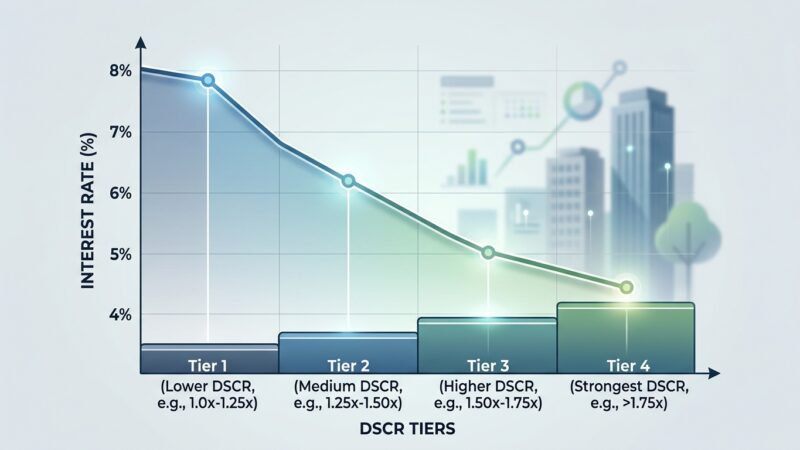
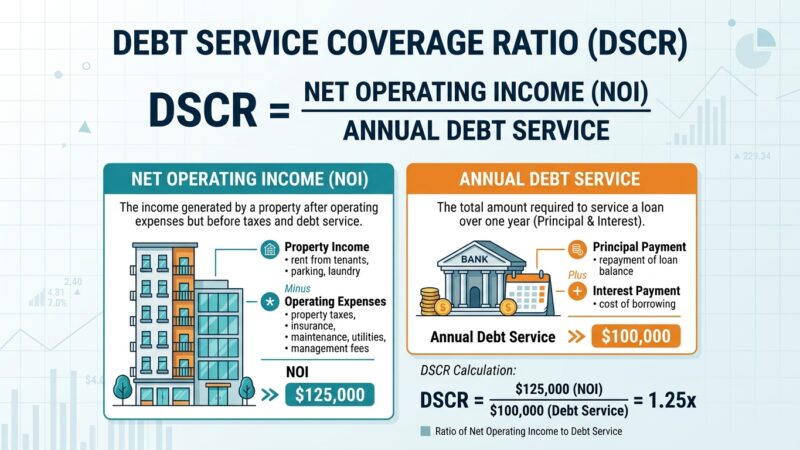
The Debt Service Coverage Ratio (DSCR) measures the cash flow buffer available to service mortgage principal and interest. Because lenders use this metric to assign pricing tiers and rate spreads, eve
Navigating the commercial debt capital markets requires a comprehensive understanding of core commercial real estate loan terms, structural debt mechanics, and macroeconomic rate cycles. Unlike 30-yea